Evidence-based · Peptides
GLOW Blend (GHK-Cu + BPC-157 + TB-500) Dosing
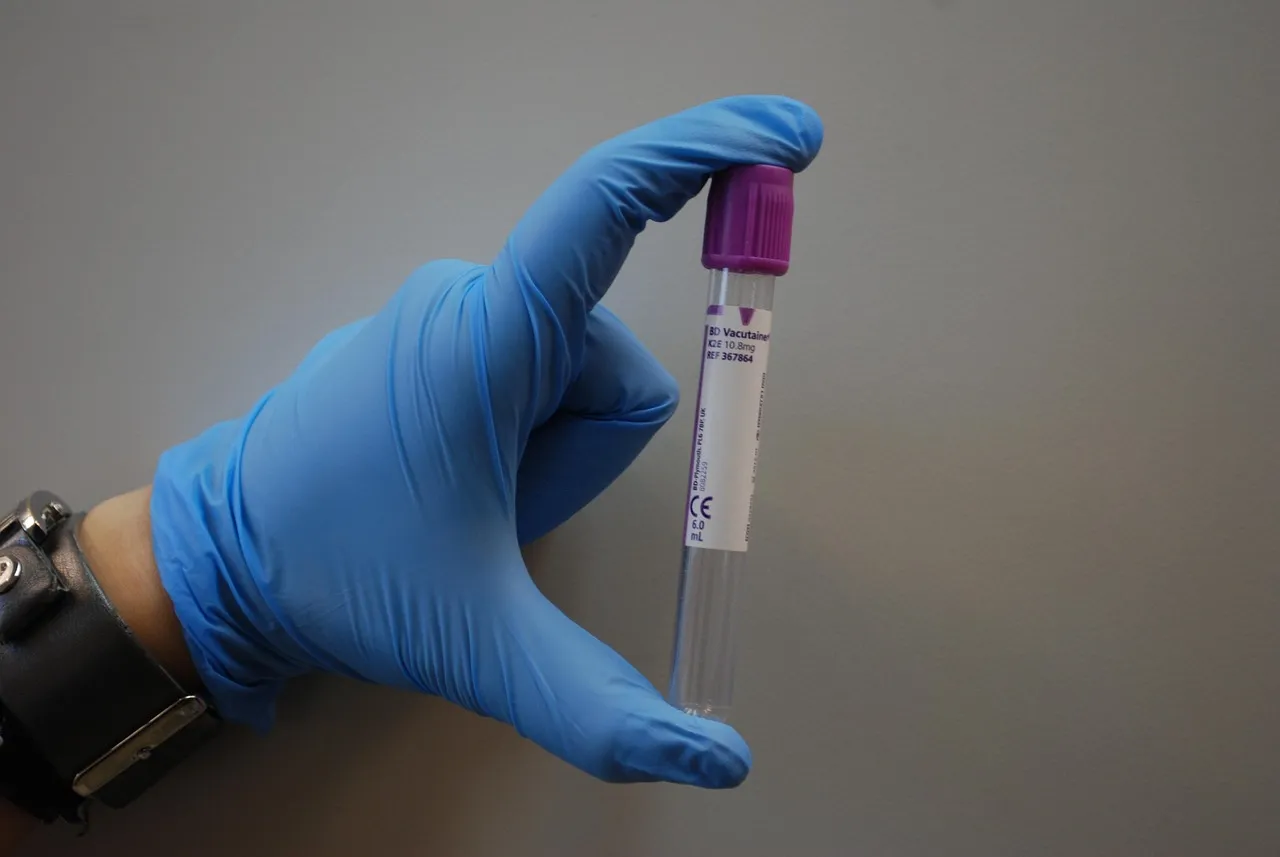
The standard GLOW vial packs 50 mg GHK-Cu, 10 mg BPC-157 and 10 mg TB-500. Here is how GLOW peptide blend dosage math works, one draw at a time.
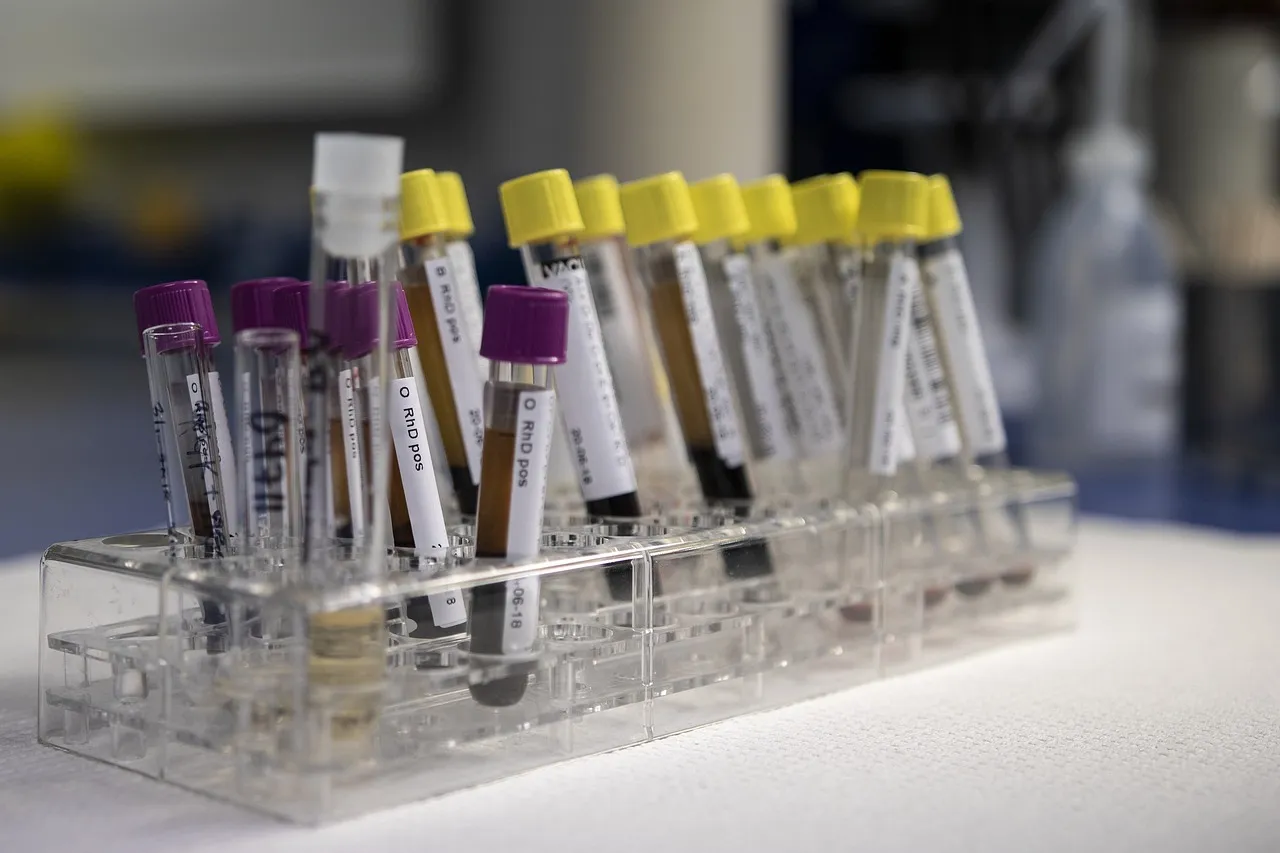
Part ofThe Research-Peptide Directory→If you are looking at a vial labeled GLOW and trying to work out the dose, the first thing to understand is that you are dosing one mixture, not three peptides. GLOW is a pre-blended combination of GHK-Cu, BPC-157, and TB-500, freeze-dried together in a single vial. When you reconstitute it, all three dissolve into one solution, and every draw you take pulls all three at once, in the exact ratio the manufacturer blended them.
That changes how the math works. You can’t look up “the GHK-Cu dose” and set it independently. So this piece walks through the actual numbers for a typical GLOW vial, and you can run your own figures through the peptide blend calculator as you read.
What’s in a GLOW vial
There is no official, standardized GLOW formula: it is a market name, not a drug, so exact amounts vary by seller. That said, the configuration you’ll see most often is a 70 mg vial in a 5:1:1 ratio:
| Peptide | Amount in vial | Share of blend |
|---|---|---|
| GHK-Cu | 50 mg | ~71% |
| TB-500 (thymosin β4 fragment) | 10 mg | ~14% |
| BPC-157 | 10 mg | ~14% |
| Total | 70 mg | 100% |
GHK-Cu dominates by mass because the copper tripeptide is usually used at much higher microgram-to-milligram amounts than BPC-157 or TB-500. Always read your own label. If your vial lists different milligrams, every number below shifts and you’ll want to recompute.
The naming refers to the skin-and-repair story behind the stack. GHK-Cu is a naturally occurring copper-binding tripeptide, first identified in human plasma in 1973, whose plasma level declines with age (from roughly 200 ng/mL at age 20 to about 80 ng/mL by age 60), which is the hook behind its regeneration claims. We unpack that evidence in GHK-Cu, the copper peptide behind the skin claims, and the recovery rationale for pairing BPC-157 with TB-500 in the BPC-157 and TB-500 stack. This article is only about the arithmetic.
Step 1: reconstitute and find the concentration
Adding one volume of bacteriostatic water dissolves the whole powder into a homogeneous solution. A common choice is 3 mL for a 70 mg vial. Each peptide’s concentration is its milligrams divided by that shared volume:
| Peptide | mg ÷ 3 mL | Concentration |
|---|---|---|
| GHK-Cu | 50 ÷ 3 | 16.67 mg/mL |
| TB-500 | 10 ÷ 3 | 3.33 mg/mL |
| BPC-157 | 10 ÷ 3 | 3.33 mg/mL |
| Total blend | 70 ÷ 3 | 23.33 mg/mL |
More water means a lower concentration and a bigger, easier-to-read draw for the same dose; less water means a smaller draw. The water volume you pick never changes the ratio between the three peptides; only the single act of blending set that.
Step 2: convert your draw to a volume
Insulin syringes are marked in “units,” not mL. On a standard U-100 syringe, 100 units = 1 mL, so:
1 unit = 0.01 mL
That conversion is deterministic (pure unit arithmetic), and it’s the bridge between the mark on the barrel and the milligrams you deliver.
Step 3: what one draw delivers
Take a 10-unit draw, which is 10 × 0.01 = 0.1 mL. Multiply each peptide’s concentration by that same 0.1 mL:
| Peptide | Concentration | × 0.1 mL | Per 10-unit draw |
|---|---|---|---|
| GHK-Cu | 16.67 mg/mL | × 0.1 | 1.67 mg (~1,667 mcg) |
| TB-500 | 3.33 mg/mL | × 0.1 | 0.33 mg (~333 mcg) |
| BPC-157 | 3.33 mg/mL | × 0.1 | 0.33 mg (~333 mcg) |
| Total | 23.33 mg/mL | × 0.1 | 2.33 mg |
So a single 10-unit draw of this vial delivers about 1,667 mcg GHK-Cu, 333 mcg TB-500, and 333 mcg BPC-157, the same 5:1:1 ratio you started with. That is the defining feature of a blend: the proportion is locked, and every draw is a scaled slice of the whole.
The one thing you can’t do: tune a single peptide
Because all three share one volume, your only lever is total draw size, and pulling that lever moves everything together:
| Draw | Volume | GHK-Cu | TB-500 | BPC-157 |
|---|---|---|---|---|
| 5 units | 0.05 mL | ~833 mcg | ~167 mcg | ~167 mcg |
| 10 units | 0.10 mL | ~1,667 mcg | ~333 mcg | ~333 mcg |
| 20 units | 0.20 mL | ~3,333 mcg | ~667 mcg | ~667 mcg |
If you decide you want more BPC-157, the only way to get it from this vial is to draw more of everything, including proportionally more GHK-Cu and TB-500. There is no draw that raises one and lowers another. If independent control matters to you, a blend is the wrong tool, and separate single-peptide vials are the only way to set each amount yourself. Run any vial size, water volume, and draw through the GLOW blend dosing calculator to see the per-peptide breakdown instantly.
Honest caveats
- This combination has never been tested in a human trial. The individual peptides have limited human data at best; the three-way blend at a fixed 5:1:1 ratio has none. The “GLOW” story is an inference stitched from separate animal and cell studies, not a validated protocol.
- Research-chemical status. GLOW and its components are sold for laboratory research, not as approved medicines. Purity, identity, and the actual milligrams in the vial are frequently unverified. If the label numbers are wrong, all the math above is wrong too.
- The math is not a safety green light. Computing what’s in a draw tells you the contents, not whether injecting it is wise. This is educational content, not medical advice. Talk to a qualified clinician before acting on any of it.
The takeaway
A typical GLOW vial is 70 mg of GHK-Cu, BPC-157, and TB-500 blended 5:1:1 in one shared solution. Divide each peptide’s milligrams by your water volume to get its concentration, convert your unit draw to mL (1 unit = 0.01 mL), and multiply: every draw delivers all three in the same locked ratio. Confirm your own label, treat the evidence base as preliminary, and use the peptide blend calculator rather than eyeballing it.
References
- Pickart L, Margolina A. Regenerative and Protective Actions of the GHK-Cu Peptide in the Light of the New Gene Data. Int J Mol Sci. 2018 (PMC6073405) — GHK as a naturally occurring plasma tripeptide and its age-related decline (~200 ng/mL at 20 to ~80 ng/mL at 60).
Sources
- U.S. FDA guidance on bulk drug substances and the research-only status of peptides such as BPC-157 and thymosin beta-4 (TB-500).
- The 70 mg / 5:1:1 GLOW configuration reflects the composition most commonly listed by research-peptide vendors; it is not a standardized or regulated formulation, and vial contents vary by seller.
Compounds in this article
Stay current
Get evidence-based briefings in your inbox.